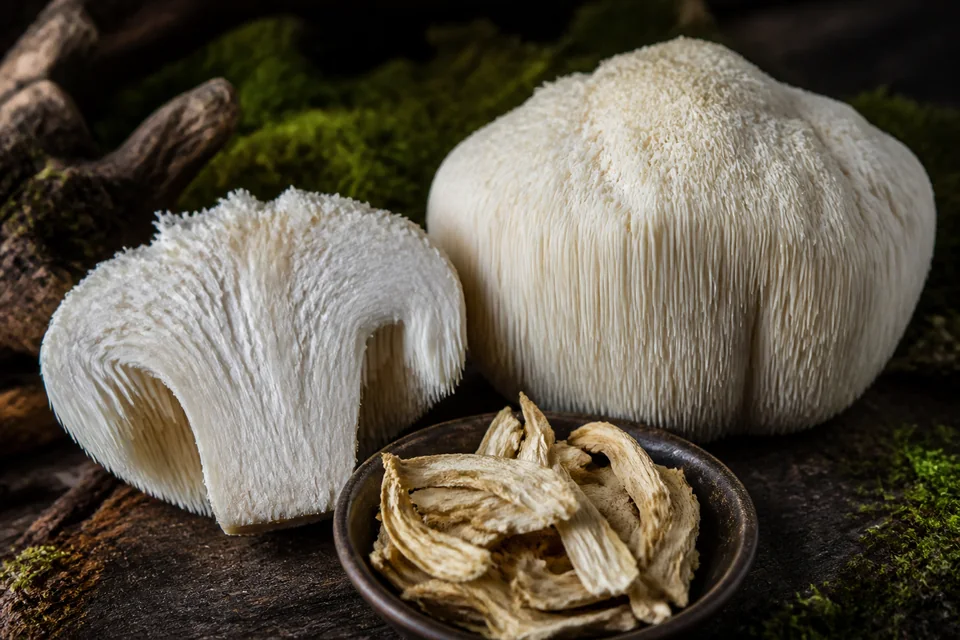
Lion's mane mushroom
Lion’s mane products can differ by fruiting body, mycelium, extraction and marker compounds. The small human evidence base does not support broad cognitive or disease claims.
No FDA Daily Value, RDA, AI or UL
Amounts used in small trials are not daily requirements and may not match commercial preparations.
Compare nutrient-reference terminology →What the research can—and cannot—support
A recent systematic review found only a small group of randomized and pilot trials alongside much preclinical research.
Small pilot studies provide exploratory signals, not firm general conclusions.
Fruiting body, mycelium and extracts cannot be treated as automatically equivalent.
Fields to verify on a real product
A familiar ingredient name is not enough to match a study or judge transparency.
Species identity: Hericium erinaceus
Fruiting body, mycelium or both
Powder versus extract and extraction ratio
Marker compounds and independent identity testing
Important reasons to pause
General information only. Suitability depends on the exact product, amount, health context and medication list.
- Mushroom allergy and gastrointestinal tolerance are relevant.
- Long-term and special-population safety remain incompletely characterized.
- Preclinical neuroprotective findings are not human disease-treatment evidence.
Where this ingredient appears in reviewed formulas
A label appearance does not transfer this ingredient evidence to the finished product. No affiliate link appears in this section.
Primary and evidence-synthesis sources
- Lion’s mane systematic review, 2025Small human evidence base plus extensive preclinical literature.
- Docherty et al., 2023Small pilot trial in healthy young adults.