Garlic
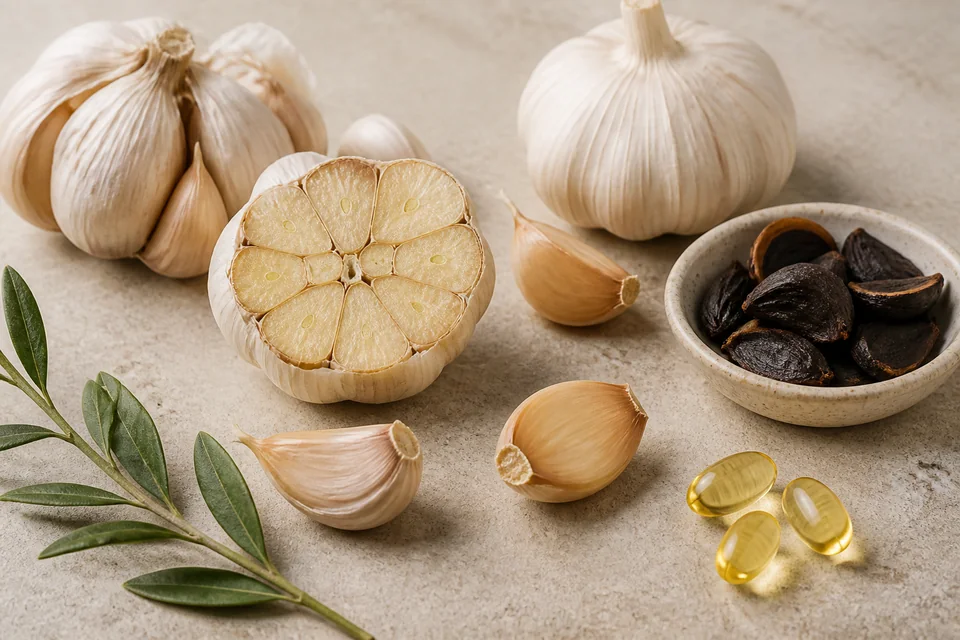
Garlic food, powder, oil and aged extract are different preparations. Evidence and safety should be mapped to the exact form and amount.
No FDA Daily Value, RDA, AI or UL for garlic supplements
Culinary intake is not directly interchangeable with a standardized supplement extract.
Compare nutrient-reference terminology →What the research can—and cannot—support
Garlic supplements may produce small reductions in total and LDL cholesterol in some populations.
NCCIH characterizes possible effects as small and the evidence as limited or mixed.
Very little research supports broad immune-boosting promotion.
Fields to verify on a real product
A familiar ingredient name is not enough to match a study or judge transparency.
Allium sativum identity
Aged extract, powder, oil or other preparation
Marker compound standardization
Amount and interaction warnings
Important reasons to pause
General information only. Suitability depends on the exact product, amount, health context and medication list.
- Oral products can cause odor, gastrointestinal effects or allergy.
- Supplemental garlic can increase bleeding risk.
- Anticoagulants, aspirin, surgery, pregnancy and breastfeeding need special attention.
Where this ingredient appears in reviewed formulas
A label appearance does not transfer this ingredient evidence to the finished product. No affiliate link appears in this section.
Primary and evidence-synthesis sources
- NCCIH: GarlicEvidence magnitude, preparation and bleeding/interaction context; updated February 2025.