How to Read a Supplement Facts Label
A field-by-field method for separating serving math, declared dietary ingredients, other ingredients and marketing language.
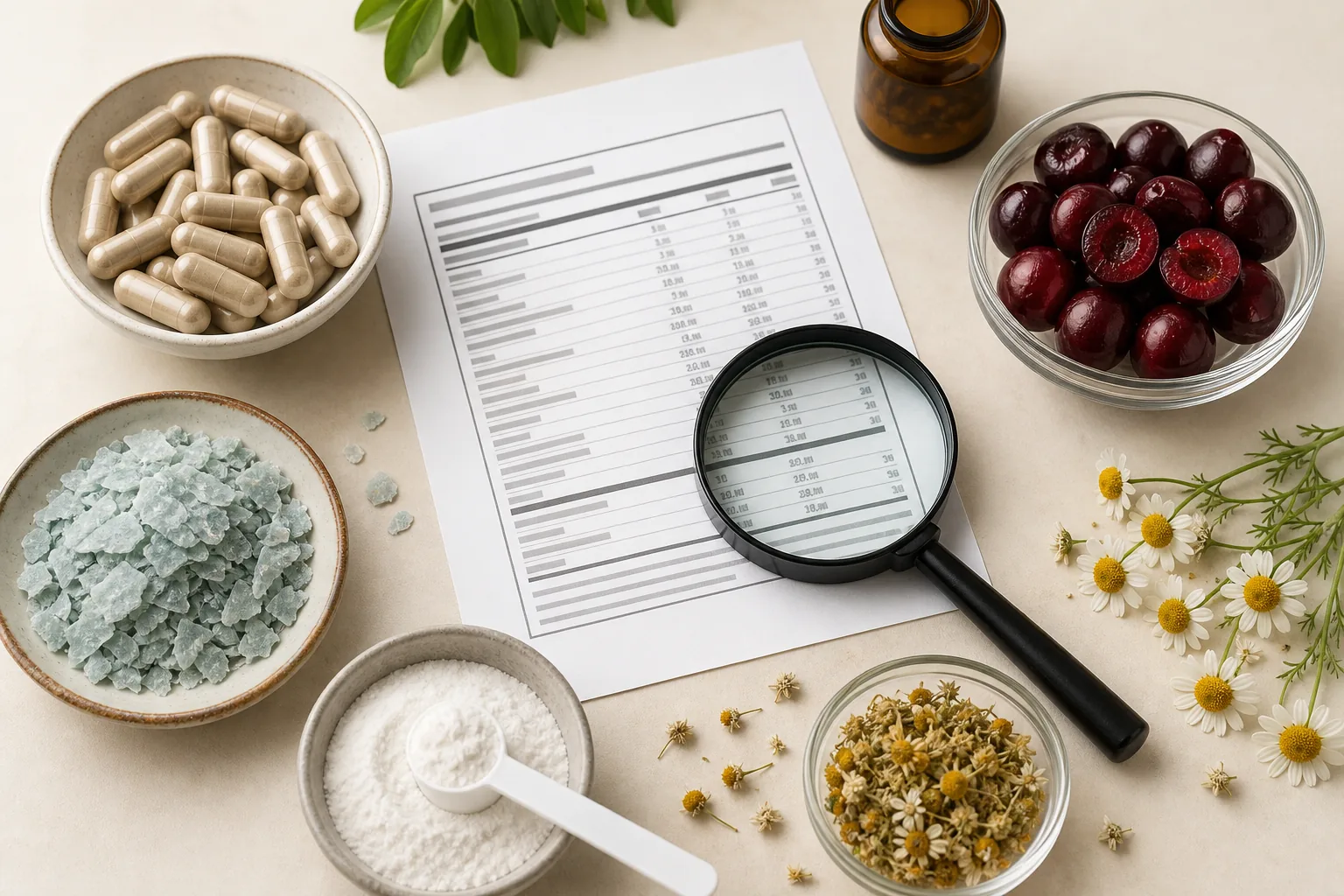
Four signals worth checking first
Serving size
This is the physical quantity behind every amount in the panel.
Amount per serving
Capture the number and unit exactly as declared before converting anything.
Ingredient identity
Record the ingredient, source or form when the panel names it.
Other ingredients
Capsule materials, flavors and processing ingredients sit outside the dietary-ingredient amounts.

A label checkpoint for side-by-side research
| Field | Question | Why it matters |
|---|---|---|
| Serving Size | How many capsules, tablets, scoops, packets or teaspoons? | It determines what amount per serving actually represents. |
| Servings Per Container | Is it stated, or can it be derived from total units? | This is the useful denominator for price comparisons. |
| Dietary ingredient | What exact name, form, source or plant part is shown? | Similar front-label names may hide materially different label records. |
| Amount and unit | Is the amount in mcg, mg, g, mL or another unit? | Unit mismatches make apparently simple comparisons unreliable. |
| Other Ingredients | What non-dietary ingredients are listed? | They can matter for dietary, format and preference filters. |
Turn the package into comparable fields.
Enter only what the current label declares. Unknowns stay visible.
What the evidence can—and cannot—tell you
The panel has required fields
FDA states that Supplement Facts labeling includes serving size, servings per container when applicable, dietary ingredients and amounts per serving.
Read FDA labeling guide ↗Labels are not premarket approval
FDA explains that it does not approve dietary supplements for safety and effectiveness before they are sold.
Read FDA 101: Dietary Supplements ↗Ingredient context needs another source
NIH ODS maintains ingredient fact sheets for consumers and health professionals. A label tells you what is declared; it does not by itself establish an outcome.
Read NIH ODS fact sheets ↗Ready for useful product picks—not placeholder rankings.
Future product cards can live here once NutraFavorites has verified the current label, merchant, price timestamp, ingredient fields and score inputs. A commercial relationship will never improve the rank.
A five-point research checklist
- Save images of every label panel and the front identifier.
- Transcribe serving size before ingredient amounts.
- Preserve original units and convert only in a separate field.
- Keep Other Ingredients separate from dietary ingredients.
- Record the product version and date because formulas can change.
FAQ
Is one capsule always one serving?
No. The labeled serving may require multiple capsules or tablets, so capsule count alone is not a comparable serving count.
Does % Daily Value show effectiveness?
No. It is a labeling reference, not a product-level effectiveness score or personalized target.
Can a front-label number replace the panel?
No. Use the Supplement Facts panel and serving size as the structured record; treat front-label language as a separate claim.