EPA vs DHA vs ALA: How to Read an Omega-3 Label
Keep total oil, EPA, DHA and ALA separate so a large front-label number does not become a false comparison.

Four signals worth checking first
EPA
Capture the EPA amount per complete serving as its own field.
DHA
Capture DHA separately instead of combining it with total oil.
ALA
Keep the plant-based essential fatty acid reference distinct from EPA and DHA.
Source and freshness
Fish or algae source, current testing and oxidation-related records need traceable context.
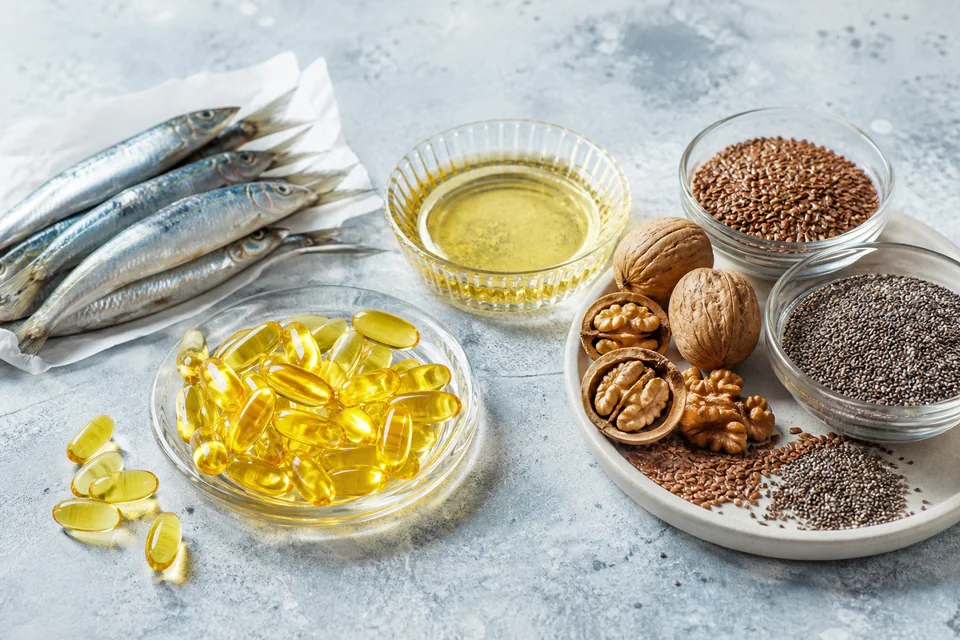
A label checkpoint for side-by-side research
| Field | Question | Why it matters |
|---|---|---|
| Total oil | How much fish, krill or algal oil is declared? | This carrier total cannot replace the active fatty-acid fields. |
| EPA and DHA | What amount of each is declared per complete serving? | Supports a valid EPA+DHA calculation. |
| ALA | Is alpha-linolenic acid present and clearly named? | ALA has a population intake reference; EPA and DHA do not share that AI. |
| Source/form | What organism and chemical form are declared? | Products with different sources and forms are not identical records. |
| Testing | Does a current record identify product, scope and date? | Generic purity or freshness language is not verification. |
Turn the package into comparable fields.
Enter only what the current label declares. Unknowns stay visible.
What the evidence can—and cannot—tell you
The omega-3 family is not one number
NIH ODS distinguishes ALA, EPA and DHA and explains that conversion of ALA to EPA and DHA is very limited.
Read NIH ODS omega-3 fact sheet ↗ALA has an AI
The Dietary Reference Intake establishes an Adequate Intake for ALA, not a general EPA+DHA daily requirement.
Read NIH ODS omega-3 fact sheet ↗Safety context includes medicines
NIH ODS describes interaction considerations at higher supplemental intakes, including anticoagulant context.
Read NIH ODS omega-3 fact sheet ↗Ready for useful product picks—not placeholder rankings.
Future product cards can live here once NutraFavorites has verified the current label, merchant, price timestamp, ingredient fields and score inputs. A commercial relationship will never improve the rank.
A five-point research checklist
- Ignore the front-label oil total until EPA and DHA are recorded.
- Preserve EPA, DHA and ALA as separate fields.
- Confirm how many softgels make a serving.
- Verify source, current testing scope and retrieval date.
- Discuss anticoagulants, surgery and high intakes with a qualified professional.
FAQ
Does 1,000 mg fish oil mean 1,000 mg EPA plus DHA?
No. The Supplement Facts panel must show the declared EPA and DHA amounts; total oil can be substantially larger.
Is ALA equivalent to EPA and DHA?
No. They are related omega-3 fatty acids, but NIH ODS keeps their intake references and metabolic context distinct.
Is algae oil automatically better than fish oil?
Source preference can matter, but product quality still requires exact amounts, form, testing, freshness and value evidence.